George Zalucki changed the way I looked at Personal Development and Business
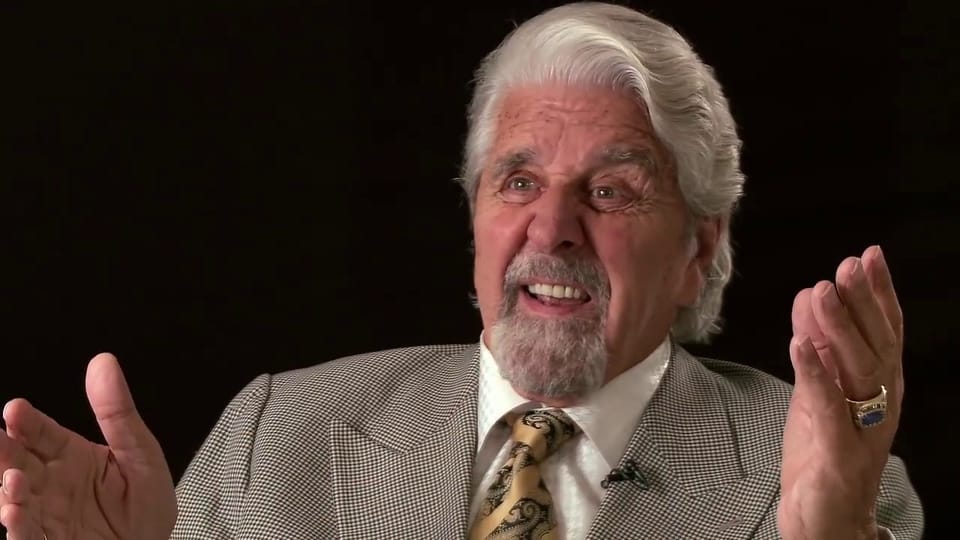
In an old seminar I revisited this week, trainer George Zalucki described the mind in a way that has stayed with me for decades. He said, “The mind has a thinker and a prover. The thinker thinks and the prover proves.” If you walk around thinking, “I’m not good at selling,” or “I’ll never get my business beyond this level,” your brain quietly goes to work proving you right. Not because it’s cruel, but because it assumes that’s what you want. Put this down to 'self-talk' we all do it.
I first heard Zalucki in the 1990s, and one line from that seminar is still more useful than half the content I see on LinkedIn today.
Audio of the Seminar: Profile of a Champion
In this article, I want to pull out a handful of his ideas and translate them into the world of small business and networking – desire, self-image, emotions, commitment, and that thinker/prover model. My aim isn’t to give you a motivational sugar rush. It’s to help you see some of the hidden ways you might be holding yourself back from the opportunities already around you.
1. Desire: white-hot purpose vs lukewarm wishes
Zalucki starts with desire – but not the vague “wouldn’t it be nice” version. Champions, he says, have an “imperative of purpose” and a desire that is “white hot” rather than tentative.
His point is simple: if you’re only inspired to meet your basic needs, you’ll never reach beyond comfortable. Needs are logical. Logic rarely drags you out of bed early or pushes you through the awkward bit.
Most owners tell me they “want more clients”. Their words say “I’m hungry”.
Their calendar, diary, and behaviour show they’re lukewarm.
- No time blocked for outreach.
- Networking done “when things quieten down”.
- Follow-ups drifting into the long grass.
Zalucki’s remedy is to surrender to a purpose that’s bigger than your current comfort. When you do that, obstacles stop being reasons to quit and start becoming part of the deal.
For a small business owner, that might be as simple as choosing one clear, near-term purpose:
“Over the next 90 days, I will create ten new, qualified conversations a week.”
Not a dream. A declaration. Then everything else in the week either serves that purpose or gets downgraded. If you are not creating any qualified conversations, this is more of an ask than you imagine.
2. Self-image: the prison or the paradise
“Nobody ever had the right to tell you you couldn’t do it.”
Zalucki hammers this point. Your self-image – what you believe about yourself – is largely formed in childhood and then quietly reinforced for decades. If you were told you were shy, difficult, not academic, not “business-minded”… and you believed it… you built either a prison or a paradise to live in.
He’s very clear:
- You created your self-image.
- You continue to maintain it with your own self-talk.
In business, it shows up as:
- “I’m not a natural sales person.”
- “I’m hopeless at following up.”
- “I could never charge those fees.”
The mistake most people make is to attack the “bad bits”: “Right, I’m going to stop procrastinating. I’m going to stop being disorganised.” The more you resist a trait, the more attention you give it. As he puts it, “That which you resist about you, persists about you.”
His alternative is far more practical:
- Stop obsessing over what’s wrong with you.
- Decide who you want to become.
- Begin doing small things that person would do.
New activities create new experiences. New experiences provide new evidence. New evidence allows a new belief about yourself. That’s how you change self-image – not by bullying yourself in the mirror each morning.
3. The Thinker and the Prover in your business
Here’s the concept that stuck with me:
“The mind has a thinker and a prover. The thinker thinks and the prover proves what the thinker thinks.”
If the thinker quietly repeats, “I’m not good at networking,” the prover goes out and lines up “proof”:
- You forget to follow up after meetings.
- You feel awkward at events and stand near the coffee.
- You tell yourself, “I knew this wasn’t for me.”
If the thinker decides, “I can learn to build strong relationships,” the prover has to go looking for different evidence:
- One conversation that went better than expected.
- A person who said, “That was helpful, thank you.”
- A small win from a follow-up you nearly didn’t send.
For small business owners, the thinker/prover pattern shows up everywhere:
- Pricing
- Thinker: “People round here won’t pay that.”
- Prover: Attracts people who haggle and ignore the ones who’d happily pay more.
- Marketing
- Thinker: “Nobody wants to hear from me on LinkedIn.”
- Prover: You post rarely, half-heartedly, and at the first quiet response you say, “Told you so.”
- Growth
- Thinker: “I’m stuck at this level.”
- Prover: You avoid help, avoid numbers, avoid decisions… and stay exactly where you are.
The uncomfortable bit is this: your current business is strong evidence of what your thinker has been whispering for years. The good news is you can change the script – not overnight, but conversation by conversation, decision by decision.
4. Emotions and avoidance: what really stops preparation & follow-through
One of Zalucki’s bolder claims is that most of our life is organised around avoiding a few emotions we’ve decided we cannot bear: feeling stupid, rejected, overwhelmed, alone, inadequate.
He shows how this plays out in three areas he calls the Three Ps:
- Preparation
- Presentation
- Persistence
You don’t prepare because you don’t want to feel overwhelmed or “not ready”.
You don’t present (have the sales conversation, make the offer) because you don’t want to feel incompetent or humiliated.
You don’t persist because you don’t want to feel rejected, tired, or like a “failure”.
From the outside, it looks like laziness or distraction. Inside, it’s emotional self-protection.
His challenge is simple and uncomfortable: if you’re unwilling to include and embrace these emotions as part of the journey, you won’t enjoy long-term success in anything. Expressed emotions don’t kill us. Suppressed ones quietly run the show.
In business terms, that means:
- You will need to feel awkward on some calls.
- You will need to feel out of your depth with some opportunities.
- You will need to feel rejected more times than you’d like.
Not as a sign you’re failing, but as confirmation you’re playing at a level that matters.
5. Commitment & persistence: beyond the mood you said it in
This is my personal mantra and one I notice in others and remind people of when deserved:
“Commitment is doing the thing you said you would do, long after the mood you said it in has left you.”
Most people’s commitment runs:
“I’ll do whatever it takes… until it’s uncomfortable, inconvenient, or doesn’t work immediately.”
When that’s the script, the thinker quietly concludes, “I’m just not cut out for this,” and the prover obligingly finds more reasons to quit.
Zalucki’s version of commitment is tied back to purpose. If you’ve truly surrendered to a purpose, persistence is simply the visible side of that commitment. It doesn’t have to feel like grinding struggle. It’s “what I do because I said I would”.
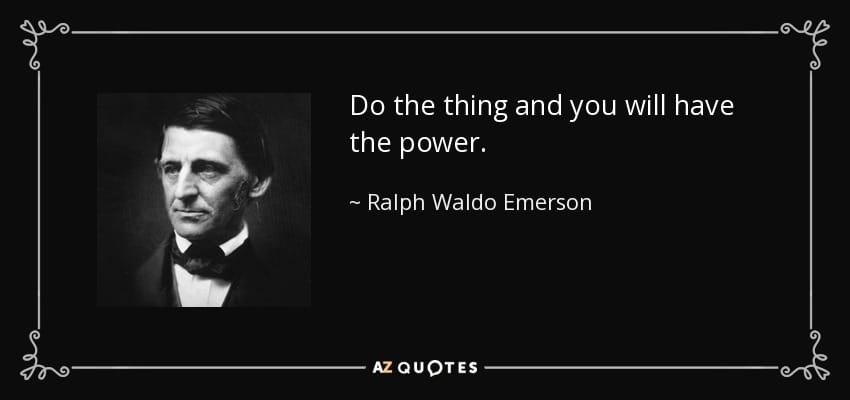
He quotes Emerson: “Do the thing and you shall have power.” The great composers didn’t sit around waiting for inspiration; they showed up and worked, and the inspiration met them there.
For a business owner, that might look like:
- Writing the weekly email even when you’re not “in the mood”.
- Turning up at the networking meeting even when it’s cold and dark.
- Making the follow-up calls you promised yourself, even when yesterday was full of “no”.
Each time you keep your word to yourself, you reclaim a bit of power. Each time you break it, you drain it.
6. Time, happiness, and the moment you’re in
Zalucki also has a lot to say about time. His point is almost annoyingly simple:
All we ever actually have is now.
Yet most of us live with one foot in yesterday’s regrets and the other stretching towards tomorrow’s hopes, while the present moment – the only place we can act – gets ignored.
You see this with owners who say,
“When things settle down, I’ll sort the marketing.”
“When I’ve got more time, I’ll start building my network.”
Tomorrow arrives as “another now”, shaped by the same thinking, the same avoidance, the same half-commitments. Nothing changes.
Happiness, he suggests, isn’t around the next corner. It’s a present condition of thinking different thoughts about where you are and what you’re doing today. Two people behind the same “prison bars”: one sees mud, the other sees stars. The condition is identical. The interpretation is different.
If this has nudged something and you’d like to explore how your own “thinker and prover” might be shaping your marketing, networking, and results, you’re welcome to reach out.
Sometimes the biggest shift comes not from learning something new, but from finally seeing how your own mind has been working – faithfully – against your best intentions.
What if 2026 was the year you stopped trying to do it all on your own?
Over the next few months I’m putting together a small group of business owners who are serious about changing the way they sell, market and grow – and who are willing to look honestly at the habits and thinking that have kept them stuck. We’ll blend practical sales and marketing strategy with simple, real-world ways to use AI as an extra pair of hands in the business, not another shiny distraction.
Oh, and it will include a handy dose of qualified referrals through the relationships we build and the way we collaborate
If you’d like to be part of that conversation and feel you’re ready to do the work, get in touch with me directly – send me a message or reply to this article and we’ll explore whether it’s a good fit for you and your plans for 2026.




Member discussion