Why Is Change So Hard? Jim Rohn Had the Answer
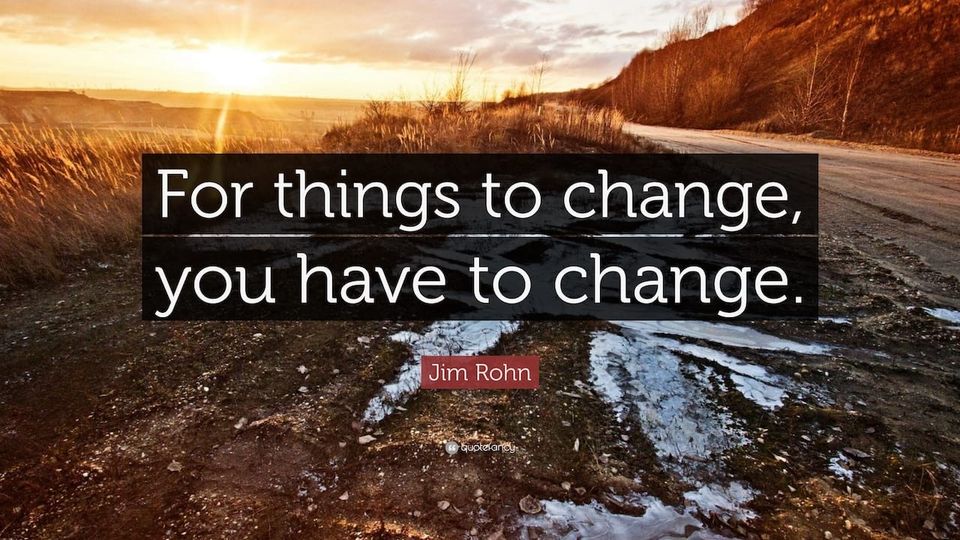
I am guilty more times than you can imagine, so I notice it in conversations with business owners and in the quieter moments when people talk about their own lives. They want things to be different. The turnover needs to grow, the team needs to perform better, the relationship needs to improve, the health needs to change. And yet, when it comes to the habits, the mindset or the skills that would actually produce that different outcome, something in us resists.
It's worth asking why, because the pattern is so consistent that it cannot simply be put down to laziness or lack of ambition. I think it comes down to something much more human than that. Whenever we try anything new, whenever we stretch beyond what is comfortable and familiar, we are taking a risk. Sometimes that risk is financial. More often, if we are honest, it is the risk of embarrassment or rejection, the fear that we will try and be seen to fail.
That fear is real, and I would never dismiss it. But if you look back over your own life, at any stage of it, you will notice something. Every meaningful shift, every improvement you are glad happened, was preceded by a decision to take some kind of risk. The job you applied for despite feeling underqualified. The conversation you had that could have gone badly. The idea you put into the world not knowing how it would be received. None of it was risk free, and none of it would have happened if you had waited for certainty.
The people who avoid risk entirely do not avoid difficulty. They simply exchange one kind of difficulty for another. They stay where they are, which feels safer in the short term, but the situation they wanted to change remains unchanged. That is not a moral failing. It is simply how life works. Nothing shifts without some willingness to move into territory that has not been proven safe in advance.
None of this is an argument for recklessness. Minimising risk where you sensibly can is good judgement, not timidity. But there is a difference between managing risk and refusing it altogether, and it is worth being honest with yourself about which of the two you are actually doing when you say a goal matters to you.
This becomes particularly clear when it comes to developing new skills or building relationships, both of which sit at the heart of anyone who wants to grow. A new skill, by definition, means being bad at something for a while before you are good at it. A new relationship, whether with a client, a partner or a team member, means exposing yourself to the possibility that it will not work out as you hoped.
If we are only willing to do the things we already know we can do well, we are not really developing anything. We are simply repeating what we have already mastered.
I think this is where failure needs a different reputation than the one it usually gets. We tend to treat it as evidence that we should not have tried, a kind of verdict on our judgement or our worth. It is far more useful to see it as part of the process of growth itself, the natural cost of doing anything that stretches you. The people who build businesses, careers and relationships that actually change over time are not the ones who avoid failure. They are the ones who have made peace with the fact that it will happen occasionally, and who keep going anyway.
So when I hear someone say they want things to be different, I find myself listening for what comes next. Are they willing to change the habits, the mindset, the skills that produced the situation they are unhappy with? Or do they want the outcome to change while everything that leads to it stays exactly the same? It is rarely asked as directly as that, but it is, in the end, the only question that matters.



Member discussion