Your Second Life Starts With Three Words

There are three words most business owners would rather swallow glass than say out loud.
I don't know.
Not in front of a client. Not in front of a room full of peers at a networking breakfast. Certainly not in front of the people who work for them. We've been trained to believe that the person with the answer is the person in charge, so we bluff, we nod, and we change the subject.
I came across a short video of Naval Ravikant this week that put words to something I've felt for a long time. It's worth a few minutes of anyone's morning.
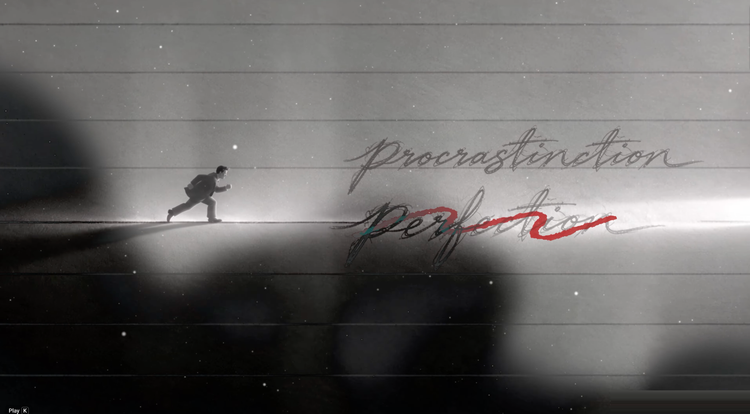
Watch it here:
The most expensive three words you never say
Admitting you don't know something feels like standing in the street in your dressing gown. Everyone can see you, and you didn't choose the outfit.
Why does it feel so exposing? Because most of us have quietly tied our worth to our expertise. If I'm the marketing person and I don't understand the new AI tools, what am I? If I've run my business for twenty years and my website isn't bringing in a single enquiry, what does that say about me?
So we protect the image instead of fixing the problem. The website stays as it is. The new skill stays unlearned. The question stays unasked.
Here's the irony. In over fifty years in sales and marketing, I've noticed the people I trusted most were never the ones with all the answers. They were the ones who said, "I'm not sure. Let me find out." That sentence builds more credibility than any brochure ever printed.
Starting over is the hard bit
If saying "I don't know" is uncomfortable, starting from scratch is worse. Now you're not just admitting a gap. You're putting your name to something new, in public, with every chance it falls flat.
Naval makes the point that the great creators all share one habit: the ability to begin again. He mentions musicians like Paul Simon, Madonna and U2 releasing albums in a completely new style, often to the dismay of their own fans. Sometimes they miss entirely. They do it anyway.
His advice is that you have to be willing to be a fool. Go back to a beginner's mind. If you aren't doing that, in his words, you're just getting older.
That landed with me. Yes, I'm getting older.
I started out selling to hairdressing salons for Wella, borrowing their reputation until I'd built my own. Since then I've started over more times than I care to count: international marketing, general management, building networks, and now learning AI alongside people a third of my age. Every one of those began with me not knowing what I was doing. Every one began with feeling slightly foolish.
None of them would have happened if I'd waited until I felt ready.
You have two lives
Part way through the video, Naval quotes a line usually credited to Confucius. He calls it a book-dropping moment. I'd agree.
Every man has two lives, and the second starts when he realises he has just one.
Read it again. Slowly.
The first life is the one we live on autopilot. We assume there's plenty of time. We protect our reputation, avoid looking daft, and save the brave decisions for some later date that never quite arrives.
The second life starts the moment that illusion breaks. Usually it's a birthday with a zero on the end, an illness, a funeral, or a business that stalls. Suddenly the question changes from "What will people think?" to "What am I waiting for?"
Naval puts it bluntly elsewhere in the conversation. Your real CV, he says, is a list of the hard things you did and the things you sacrificed. Nobody looks back at the end and treasures the time they played it safe.
So what exactly are you protecting?
Once you accept you only get one go at this, the fear starts to look a bit silly. What's the real risk of saying "I don't know"? A raised eyebrow. A moment's embarrassment. As I wrote recently, nobody is thinking about you nearly as much as you think they are.
Now weigh that against the cost of staying put:
- The website that looks lovely and hasn't produced an enquiry in two years, because admitting it isn't working feels like admitting failure.
- The referrals you never ask for, because asking means risking a "no".
- The AI tools you avoid, because learning them means being a beginner again in front of people who think of you as the expert.
- The new offer you've been sketching on the back of envelopes for three years.
Each of those is the first life talking. Careful, sensible, and slowly expensive.
The second life asks a simpler question. If the worst outcome is looking foolish for a week, and the best is a business that finally works the way you hoped, why are we still deliberating?
The Japanese have a word for this, which I've written about before: shoshin, the beginner's mind. An expert sees few possibilities. A beginner sees many. Admitting you don't know isn't a weakness. It's the door to every possibility the expert has already closed.
Which life are you living?
Watch the video. Then ask yourself one honest question.
What would you start tomorrow if you stopped worrying about looking like a beginner?
You already know the answer. You've probably known it for a while. The only thing standing between you and your second life is the willingness to say three small words, and then do something about them.
We really have nothing to lose. Only the version of ourselves we've been too careful to become.
If you'd like a second pair of eyes on what isn't working in your marketing, and you're ready to say "I don't know" out loud, get in touch. That's where the useful conversations start.



Member discussion